KDP Interiors Hotel Reservation Tracker: A Practical Tool for Organized Travel and Publishing
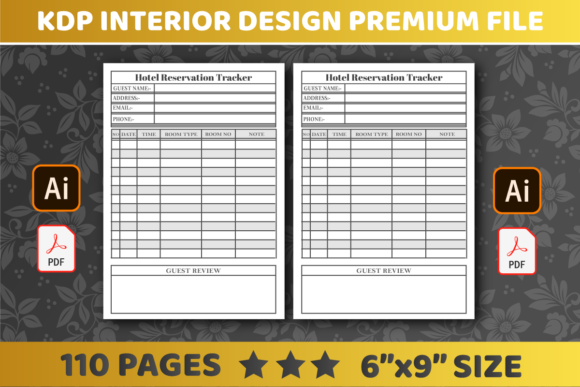
Managing accommodation logistics often feels like the most chaotic part of travel planning or hospitality management. Whether you are coordinating a family reunion, managing bookings for a boutique rental, or organizing a corporate retreat, keeping track of dates, guest names, and payment statuses in your head is a recipe for disaster. The KDP Interiors Hotel Reservation Tracker addresses this specific friction point by providing a structured, physical system for recording essential booking data. Unlike generic notebooks, this tool is designed with the specific columns and layout necessary for hospitality tracking, eliminating the need to draw lines or create headers from scratch every time you open a new page.
For creators and publishers utilizing Amazon KDP, this resource serves a dual purpose. It functions as an immediate organizational solution for personal use while also acting as a premium file asset for those building a catalog of low-content books. Understanding the practical application of this tracker helps clarify why it remains a relevant tool for both end-users seeking organization and digital entrepreneurs looking for editable, high-quality interiors.
Real-World Scenarios for Hospitality Tracking
The value of a dedicated reservation tracker becomes apparent when you move beyond abstract features and look at specific daily workflows. Different users face unique challenges that a standardized 6" x 9" logbook can solve more effectively than a scattered collection of sticky notes or complex software.
Short-Term Rental Hosts and Property Managers
Hosts on platforms like Airbnb or Vrbo often manage multiple listings across different apps. While digital calendars sync availability, they rarely provide a quick, tactile overview of operational details. A host might use the KDP Interiors Hotel Reservation Tracker as a master log at the physical property. When a cleaner arrives or a maintenance issue arises, having a centralized book allows staff to verify check-in times and guest counts without needing access to the host’s private digital accounts. This analog backup ensures continuity during internet outages and provides a tangible record for tax season or dispute resolution.
Event Planners and Retreat Coordinators
Organizing a wedding, conference, or educational retreat involves managing room blocks for dozens or hundreds of attendees. Digital spreadsheets are excellent for sorting data, but they are cumbersome during on-site check-ins. An event coordinator can use this tracker to manage VIP accommodations or overflow rooms manually. The 110-page capacity is sufficient for medium-sized events, allowing the planner to record special requests, dietary restrictions linked to room numbers, and shuttle schedules in one portable location. This reduces the cognitive load during high-stress event execution.
Digital Publishers and Content Creators
For entrepreneurs in the KDP space, this tracker represents a foundational product asset. Rather than spending hours designing table structures and testing margins, publishers can utilize the premium file to launch a professional-grade logbook quickly. Because the file includes AI and PDF formats, creators can customize the branding, add instructional pages, or modify column headers to target niche markets such as "Campground Reservation Logs" or "B&B Guest Books." The ability to easily edit the source files means you aren't locked into a single design; you can adapt the interior to match current market trends or specific customer feedback.
Technical Specifications and Practical Benefits
Understanding the technical constraints of the KDP Interiors Hotel Reservation Tracker is crucial for ensuring it meets your specific needs, whether for printing or publishing.
- Dimensions (6" x 9"): This trim size strikes a balance between portability and usability. It is large enough to accommodate detailed handwriting in reservation fields but compact enough to fit in a glove compartment, purse, or desk drawer. For publishers, this size has lower printing costs compared to larger formats, allowing for competitive pricing.
- Page Count (110 Pages): This volume provides substantial utility without making the book feel unwieldy. For a user, it offers months of tracking space. For a seller, it hits a sweet spot where the perceived value matches the production cost, avoiding the thinness of a pamphlet or the excessive bulk of a year-long ledger.
- No Bleed Setting: The no-bleed configuration simplifies the printing process significantly. Margins are safely contained within the page boundaries, reducing the risk of content being trimmed off during manufacturing. For editors and designers, this means less time adjusting safety zones and fewer rejected proofs during the upload process.
- Editable File Formats (PDF, AI): Access to Adobe Illustrator (AI) files is a significant advantage over static PDFs. It allows for vector-based editing, meaning you can resize elements without pixelation, change fonts to match your brand identity, or restructure tables entirely. This flexibility transforms a generic template into a proprietary product.
Considerations Before Adoption or Purchase
While this tracker offers distinct advantages, it is not a universal fix. Evaluating your specific context prevents buyer’s remorse or wasted creative effort.
Assessing Workflow Compatibility
If you already rely heavily on automated channel managers or cloud-based PMS (Property Management Systems), a physical tracker should serve strictly as a supplementary tool rather than a primary database. Attempting to duplicate every digital entry into a paper log creates redundant work. Instead, identify the gaps in your digital workflow—such as quick-reference notes for housekeeping or offline backups—and use the tracker specifically for those tasks. If you require searchable data analytics or automatic calendar syncing, this analog tool will not replace your software stack.
Evaluating Customization Needs
Publishers must consider their target audience before using the base file. A standard hotel reservation layout may not suit niche buyers. Before uploading, review the column headers and spacing. Does the target demographic need space for "Pet Fees," "Crib Requests," or "Corporate Billing Codes"? Since the file is easily editable, failing to tailor these details misses an opportunity to differentiate your product. Generic interiors compete solely on price; customized interiors compete on relevance.
Understanding Physical Limitations
Users should recognize that a 6" x 9" format limits horizontal writing space. If your reservation notes typically include long-form comments or extensive guest histories, the standard columns may feel cramped. Test print a few pages before committing to the full 110-page book to ensure the field widths accommodate your handwriting or typical data entry length. For publishers, this highlights the importance of providing clear descriptions and preview images so customers understand exactly what fits on each line.
Maximizing Value Through Intentional Use
The effectiveness of the KDP Interiors Hotel Reservation Tracker depends entirely on how intentionally it is integrated into a routine. For hospitality professionals, consistency is key. Establishing a protocol where every booking is logged immediately upon confirmation prevents the backlog that renders paper systems useless. Color-coding entries with highlighters or pens can add a layer of visual organization that digital systems sometimes lack, allowing for instant recognition of urgent check-ins or maintenance holds.
For KDP creators, the value lies in iteration. Treat the initial download as a prototype. Gather feedback from beta testers or early buyers regarding the layout's functionality. Did they run out of space in the "Rate" column? Was the "Notes" section too narrow? Use the editable AI files to implement these improvements in version 2.0. This responsive approach builds authority and trust with your audience, signaling that you understand the practical realities of reservation management rather than just selling a static template.
Ultimately, this tool bridges the gap between digital convenience and analog reliability. In an era of notification fatigue, having a dedicated, quiet space to manage reservations offers mental clarity. Whether you are streamlining your own travel business or providing resources for others to do the same, success comes from aligning the tool’s specifications with genuine human needs. By focusing on practical application over theoretical features, both users and publishers can extract meaningful value from this specialized interior.