Building a KDP Business with High-Quality Password Log Book Interiors
In the rapidly expanding world of self-publishing, low-content and medium-content books have emerged as a viable entry point for entrepreneurs. Among these niches, the Password Log Book Journal stands out as a perennial bestseller with consistent demand. As digital security becomes increasingly complex, the need for a physical, offline repository for login credentials has not diminished; in fact, it has grown among demographics seeking to protect their sensitive data from cyber threats. For Amazon KDP publishers, success in this category relies less on writing prose and more on providing exceptional utility through professional-grade interiors.
This guide explores the strategic importance of using pre-formatted, tested KDP interiors for password trackers. We will examine why specific technical specifications matter, how alphabetical organization enhances user experience, and how leveraging ready-made assets can streamline your publishing business while maintaining high quality standards.
The Enduring Relevance of Physical Password Trackers
It is a common misconception that password logbooks are obsolete in the era of cloud-based password managers. While digital tools are convenient, they introduce new vulnerabilities. A physical password logbook journal offers an air-gapped solution—meaning it is completely disconnected from the internet and immune to hacking, phishing, or server breaches. This tangible security appeals to seniors, privacy advocates, and professionals who manage legacy accounts that do not require frequent cloud syncing.
For KDP creators, understanding this audience is crucial. You are not merely selling a notebook; you are selling peace of mind and organizational clarity. The interior design must reflect this seriousness. A generic lined notebook does not suffice. Users require structured fields for usernames, passwords, PINs, security questions, and website URLs. When you utilize a specialized KDP Interior Password Logbook, you demonstrate an understanding of the user's specific pain points, which translates directly to better reviews and higher conversion rates.
Technical Specifications: Why Format Matters on KDP
One of the most significant hurdles for new publishers is navigating Amazon’s strict printing guidelines. A manuscript that looks perfect on a screen may be rejected during the upload process due to margin errors, bleed issues, or resolution problems. Using a professionally designed template eliminates this friction.
Optimal Dimensions and Page Count
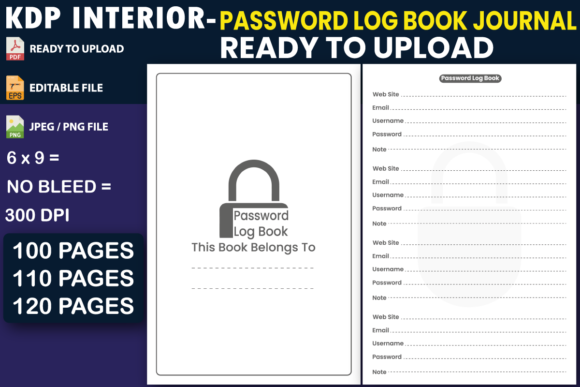
The industry standard for this niche is the 6″ x 9″ inch trim size. This dimension strikes the perfect balance between portability and usability. It is large enough to accommodate handwriting comfortably but compact enough to fit in a desk drawer or safe. A page count of 105 pages is strategically chosen to provide substantial value without driving up printing costs excessively, allowing for a competitive retail price point while maintaining healthy royalties.
Understanding Bleed vs. No Bleed
A critical feature of high-quality interiors is the inclusion of both bleed and no-bleed options. "Bleed" refers to printing that extends to the very edge of the paper, requiring the design to extend beyond the trim line. "No bleed" keeps all content within a safe margin. Professional password tracker templates often provide separate PDF files for each option. This flexibility allows you to decide whether your aesthetic requires edge-to-edge graphics or a clean, bordered look, ensuring your file passes KDP’s automated review system on the first attempt.
Resolution and Print Quality
Blurry text is the fastest way to garner negative feedback. All professional KDP interiors must be rendered at 300 DPI (dots per inch). This high resolution ensures that lines are crisp, text is sharp, and any decorative elements appear professional rather than pixelated. When sourcing or creating interiors, always verify the resolution properties of the PDF before uploading.
User Experience: The Power of Alphabetical Organization
Functionality dictates sales in the utility book market. A password log book without an indexing system is essentially useless. The most effective layouts feature A-Z alphabetical tabs integrated directly into the design. This allows users to instantly locate their banking credentials under 'B' or email logins under 'E' without flipping through hundreds of unmarked pages.
Furthermore, allocation matters. Not all letters are created equal; users have far more entries for 'S' (Social Media, Shopping, Streaming) than for 'X' or 'Z'. A well-designed interior accounts for this variance. Providing 4 pages per letter ensures adequate space for common categories while preventing wasted whitespace for rare letters. Some advanced templates even include additional notes pages at the end for recording WiFi codes, router settings, or emergency contact information, adding perceived value to the product.
Streamlining Production with Ready-Made Assets
Time is the most valuable resource for a KDP publisher. Designing a 105-page interior from scratch, calculating gutters, setting margins, and creating tab dividers can take dozens of hours. Utilizing 100 ready for upload to Amazon KDP interiors transforms this timeline from weeks to minutes.
File Formats and Customization
Premium interior packages typically include two distinct file types:
- PDF Files: These are print-ready documents formatted specifically for KDP’s 6x9 specifications. They serve as the immediate upload asset.
- AI (Adobe Illustrator) Files: These source files allow for customization. If you wish to change the font, adjust the header style, or add your own branding to differentiate your book from competitors, the AI file provides the necessary editable layers.
Having access to the source file is particularly important for building a brand. While the base structure of a password log book with alphabetical tabs is functional, your unique cover design and minor interior tweaks create the distinct identity needed to stand out in search results.
Strategic Considerations for KDP Success
Acquiring a high-quality interior is only the first step. To build a sustainable business around Kindle Direct Publishing password logbooks, consider the following strategic elements:
- Niche Differentiation: The general "password logbook" keyword is competitive. Use your customizable interiors to target sub-niches. Create versions specifically for seniors (larger font, high contrast), gamers (dark mode aesthetics), or business professionals (minimalist, corporate styling).
- Cover Design Synergy: Your interior quality must match your cover. A beautiful, intricate cover paired with a misaligned or low-resolution interior leads to returns. Ensure your cover designer knows the exact page count (105 pages) and spine width calculations based on the cream or white paper stock you select.
- Keyword Optimization: When listing your book, use semantic variations naturally. Terms like "internet login organizer," "website password keeper," and "offline security journal" capture different segments of the search intent beyond just "password book."
- Quality Assurance: Always order a proof copy before launching. Even with tested for upload on KDP files, seeing the physical product reveals insights about paper opacity and binding that digital previews cannot show. Ensure the ink doesn't bleed through when users write with gel pens or markers.
Common Misunderstandings About Low-Content Publishing
New publishers often assume that because a book is "low content," it requires low effort. This is a dangerous fallacy. The barrier to entry is low, but the barrier to sales is quality. Customers are discerning; they compare Look Inside previews and read reviews meticulously. A password logbook journal that lacks proper margins, has inconsistent tab alignment, or uses fonts that are too small to read will fail regardless of how attractive the cover is.
Additionally, some publishers believe they can simply upload the same interior file across multiple accounts or variations to dominate the market. Amazon’s algorithms prioritize unique customer value. Using a licensed, professional interior gives you the legal right to publish, but you must still add unique value through curation, design, and marketing to avoid being flagged as duplicate content.
Conclusion: Investing in Professional Foundations
Building a profitable KDP publishing business requires treating your books as legitimate products rather than lottery tickets. The Password Log Book Journal-KDP Interiors serves as a foundational asset that bridges the gap between amateur attempts and professional publishing. By utilizing 105 pages of high-resolution, alphabetically organized, and technically compliant layouts, you position yourself to meet genuine consumer needs.
Whether you are a beginner looking for your first sale or an experienced publisher scaling your catalog, the efficiency and reliability of pre-formatted interiors allow you to focus on what truly drives revenue: market research, cover design, and advertising. In the competitive landscape of Amazon KDP, quality is not optional—it is the primary differentiator. Equip yourself with the right tools, understand the technical requirements, and respect the end-user's need for security and organization to build a lasting presence in the password tracker niche.