KDP Interiors Puzzle: Strategic Asset Selection for Children’s Activity Books
Hello and welcome to my Lafuma Design Studio. Here you can find and buy ready-made kids' interiors files specifically engineered for the KDP business. For publishers and creators focusing on the children’s logic puzzle niche, understanding the strategic value of a pre-formatted asset like the KDP Interiors Puzzle collection is essential for sustainable portfolio growth. This specific resource offers 142 Kids Kakuro Puzzles with solutions, designed not merely as content filler but as a foundational element for building a cohesive brand in the low-content publishing space.
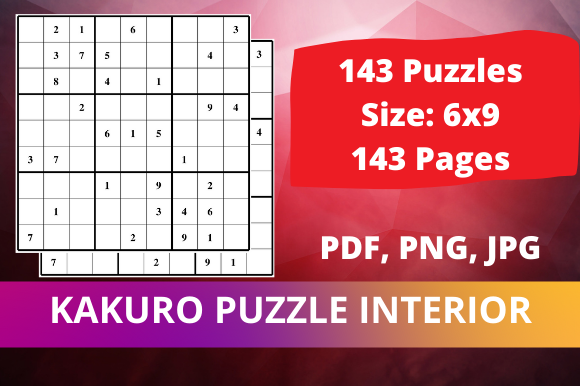
Selecting the right interior is rarely just about having pages to print; it is about aligning product specifications with market expectations and operational efficiency. The 142 Kids Kakuro Puzzles package serves as a practical case study in intentional publishing. By utilizing a standardized 6″ x 9″ trim size with a 9×9 grid layout, this asset addresses specific consumer needs while streamlining the production workflow for entrepreneurs, educators, and freelancers entering or expanding within the Amazon Kindle Direct Publishing ecosystem.
Evaluating the Strategic Utility of Pre-Made Kakuro Assets
For decision-makers in self-publishing, time is often the most constrained resource. The primary strategic advantage of acquiring a dedicated KDP Interiors Puzzle file lies in the decoupling of content creation from product assembly. Developing 142 unique logic puzzles, verifying their solvability, formatting them for print, and creating corresponding solution keys requires dozens of hours of specialized labor. By leveraging a ready-made solution, publishers redirect that capital toward high-value activities such as keyword research, cover design optimization, and marketing strategy.
This particular asset features four puzzles per page and four solutions per page across 143 total pages. This density is not arbitrary; it represents a calculated balance between perceived value and printing costs. In the children’s activity book category, parents and educators look for substantial content volume without excessive bulk. A 6″ x 9″ format with this specific pagination creates a spine width sufficient for professional presentation on a bookshelf while maintaining a price point competitive against mass-market alternatives. Understanding these physical constraints allows publishers to position their products effectively before a single sale is made.
Technical Specifications and Operational Readiness
Operational friction often derails publishing timelines. When evaluating any KDP Interiors Puzzle resource, technical compatibility must be verified immediately. This package includes three distinct file formats: PDF, PNG, and JPG. While PDF is the industry standard for KDP upload due to its fixed layout and vector-sharp text rendering, the inclusion of raster formats provides flexibility for repurposing content across other platforms or marketing materials.
- PDF File: The primary deliverable for Amazon KDP. Ensure this file is flattened and embedded with proper fonts to prevent shifting during the printing process.
- PNG and JPG Files: Useful for creating promotional mockups, social media teasers, or listing images that showcase the interior quality to potential buyers.
- Black and White Interior: Optimized for standard ink printing, which maximizes royalty margins compared to color printing options.
- Trim Size Compliance: Pre-set to 6″ x 9″, eliminating the need for manual margin adjustments or bleed calculations.
The "Ready to Upload" designation implies that margins, gutters, and safe zones have been pre-calculated. However, experienced publishers know that verification is mandatory. Always run the provided PDF through Amazon’s previewer tool before publishing to ensure no automated rejection occurs due to minor DPI or margin discrepancies. This step transforms a generic asset into a reliable component of your business operations.
Intentional Positioning Within the Logic Puzzle Niche
Acquiring 142 Kids Kakuro Puzzles is only the first step; success depends on how these puzzles are positioned within the broader market. Kakuro occupies a unique intersection between Sudoku and crossword puzzles, appealing to an audience seeking mathematical logic rather than linguistic trivia. This distinction is critical for targeting. Unlike generic activity books, Kakuro attracts parents focused on STEM skill development, numerical fluency, and critical thinking.
When integrating this KDP Interiors Puzzle set into your catalog, avoid generic titling. Instead of "Kids Puzzle Book," consider positioning that highlights the educational outcome: "Logical Math Challenges for Ages 8-12" or "Critical Thinking Kakuro for Elementary Students." The 9×9 grid complexity suggests this content is best suited for advanced beginners or intermediate solvers rather than toddlers. Misaligning the difficulty level with the target age group is a common failure point that leads to negative reviews. Use the sample puzzles to verify the difficulty curve matches your intended customer avatar.
Differentiation Through Curation and Context
A significant risk in using ready-made interiors is homogeneity. If multiple publishers use the exact same 142 puzzles without modification, the marketplace becomes saturated with identical products. To mitigate this, treat the Lafuma Design Studio asset as a core component rather than the entire product. Strategic differentiation involves adding unique value layers that competitors cannot easily replicate.
Consider wrapping the puzzles in original context. Add an introduction explaining the cognitive benefits of Kakuro, include tutorial pages demonstrating solving techniques, or create themed sections that align with school curricula. Even simple additions like custom headers, footers with motivational quotes, or branded certification pages at the back of the book can transform a commodity interior into a proprietary product. This approach leverages the efficiency of pre-made content while satisfying Google’s E-E-A-T principles by demonstrating expertise and adding genuine user value beyond the raw puzzle data.
Risk Management and Quality Assurance Protocols
Relying on third-party interiors introduces specific risks that must be managed proactively. The most critical concern is licensing clarity. Before purchasing or uploading, confirm that the license permits commercial use on Amazon KDP and whether exclusivity is required. Non-exclusive licenses allow broader distribution but increase competition; exclusive licenses protect your asset but limit revenue streams. Understanding these terms prevents future account issues or legal complications.
Additionally, quality assurance extends beyond file formatting. Logic puzzles must be functionally correct. A Kakuro puzzle with multiple valid solutions or no solution at all destroys credibility instantly. While reputable studios test their products, prudent publishers conduct spot checks. Randomly select five to ten puzzles from the 142-puzzle set and solve them manually. Verify that the solution key matches the puzzle layout exactly. This small investment of time safeguards your brand reputation against the devastating impact of defective content.
Long-Term Portfolio Integration Strategy
Sustainable KDP businesses are built on series and brands, not isolated uploads. This KDP Interiors Puzzle collection should be viewed as one volume in a larger ecosystem. Plan your acquisition strategy around scalability. If this Kakuro set performs well, identify complementary assets from the same studio to maintain visual and stylistic consistency. Consistent interior design builds reader trust and encourages repeat purchases.
Track performance metrics specifically tied to this interior type. Monitor read-through rates (if applicable via series links), review sentiment regarding difficulty, and return rates. If customers consistently mention that the puzzles are too hard or too easy, adjust your future sourcing or modify the metadata of existing listings. Data-driven iteration turns a static purchase into a dynamic learning opportunity. Over time, your portfolio evolves from a collection of random assets into a curated library that serves a clearly defined audience segment.
Making Informed Decisions for Content Acquisition
The decision to purchase ready-made interiors should always be grounded in realistic ROI projections. Calculate your break-even point based on the asset cost, expected royalties per unit, and advertising spend. For a 143-page black-and-white book at a standard price point, determine how many units must sell to recoup the initial investment. If the niche is overly saturated or the profit margin is too thin, even a high-quality interior may not be a viable business decision.
Furthermore, consider the opportunity cost. Does this specific Kakuro collection align with your current marketing capabilities? If you lack access to audiences interested in math puzzles, acquiring this asset may result in dormant inventory. Align content acquisition with existing traffic sources, email lists, or advertising expertise. Strategic publishing means matching supply with proven demand channels rather than hoping visibility will materialize organically.
Ultimately, the 142 Kids Kakuro Puzzles with Solutions represent a tool for efficient execution. When used intentionally—with attention to technical compliance, thoughtful positioning, rigorous quality control, and long-term planning—this KDP Interiors Puzzle asset can significantly accelerate your publishing workflow. It allows creators to bypass the tedious mechanics of puzzle generation and focus on what truly drives business results: connecting valuable content with the readers who need it most. Welcome to a more strategic approach to KDP publishing, where every asset serves a purpose and every publication moves you closer to sustainable success.