Evaluating KDP Interiors: Fishing Log Book Templates for Low-Content Publishing
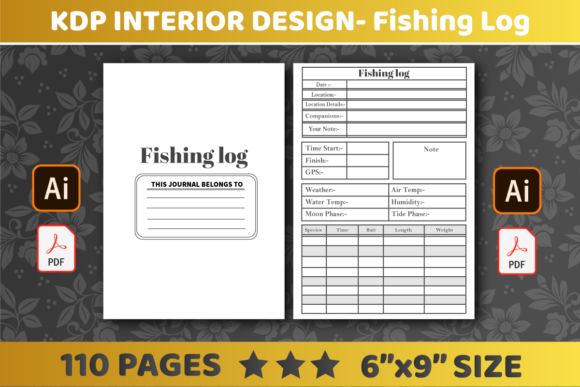
Selecting the right interior template is often the most critical technical decision when publishing a fishing log book on Amazon KDP. While the cover attracts the initial click, the interior determines whether the book receives positive reviews or returns. The specific configuration of KDP Interiors- Fishing Log Interiors—featuring a 6" x 9" trim size, 110 pages, no-bleed settings, and editable PDF/AI source files—represents a distinct category of low-content assets designed for creators who prioritize workflow efficiency over bespoke illustration. Understanding where this specific asset fits within the broader landscape of publishing resources requires looking beyond the feature list to evaluate practical application, customization potential, and market fit.
Technical Specifications and Workflow Implications
The technical parameters of these fishing log interiors are not arbitrary; they directly influence printing costs, royalty margins, and user experience. The 6" x 9" dimension is widely considered the industry standard for portable field journals. When comparing this format against larger alternatives like 8.5" x 11", the 6" x 9" size offers superior portability for anglers who need to stow the log in a tackle box or vest pocket. However, this compact footprint imposes strict spatial limitations. Designers must evaluate whether the provided layout offers sufficient writing space for detailed catch records without feeling cramped. A well-executed 6" x 9" interior balances data fields with white space, whereas poorly optimized templates can make data entry frustrating in outdoor conditions.
The 110-page count serves as a strategic middle ground in low-content publishing. Books with fewer than 80 pages often lack perceived value, while those exceeding 150 pages can become too bulky for field use and increase printing costs enough to erode royalties. At 110 pages, this template allows for a substantial number of logging entries while maintaining a slim profile. For publishers evaluating this asset, it is essential to verify that the page count aligns with current KDP printing tiers to ensure the final retail price remains competitive within the fishing niche.
The "No Bleed" setting is perhaps the most significant technical differentiator for this specific interior type. In KDP terminology, no bleed means all content, including borders and graphics, stays within the safe margin area. This contrasts with full-bleed designs where artwork extends to the paper's edge. The primary advantage of a no-bleed fishing log is manufacturing consistency; it eliminates the risk of crucial data fields being trimmed during production. For creators new to KDP or those who want to avoid common rejection errors, no-bleed interiors provide a safer production pathway. The tradeoff is aesthetic: no-bleed books inherently have a visible white border, which some consumers perceive as less premium than edge-to-edge designs. Publishers must decide if production safety and ease of editing outweigh the desire for a full-bleed aesthetic.
Editability and Source File Flexibility
A defining characteristic of this resource is the inclusion of both PDF and AI (Adobe Illustrator) files. This dual-format approach addresses two distinct user needs. The ready-to-use PDF serves creators who lack design software or wish to publish immediately without modification. Conversely, the AI file caters to publishers who view the template as a foundation rather than a finished product. When comparing this to marketplaces offering only flattened PDFs, the inclusion of vector source files significantly increases the asset's long-term utility.
Editability is particularly valuable in the fishing niche because angler preferences vary regionally and stylistically. A saltwater fisherman may require fields for tide charts and water salinity, while a freshwater fly fisher might prioritize insect hatch logs and leader specifications. Static PDF templates cannot accommodate these distinctions. With editable AI files, a publisher can modify column headers, adjust table spacing, or add specialized tracking sections to target specific sub-niches. This capability transforms a generic fishing log into a specialized tool, potentially improving market positioning. However, this flexibility assumes proficiency with vector editing software. Creators without access to Adobe Illustrator or compatible alternatives like Affinity Designer will be limited to the static PDF version, negating the customization advantage.
Comparing Template-Based vs. Custom Design Approaches
Publishers typically face three options when creating fishing log interiors: building from scratch, hiring a designer, or using pre-made templates like KDP Interiors- Fishing Log Interiors. Each approach carries distinct tradeoffs regarding time, cost, and uniqueness.
- Custom Design: Creating an interior from scratch offers maximum originality and precise alignment with target audience needs. However, this requires significant time investment and design expertise. For publishers testing multiple niches, custom design creates a high barrier to entry and slows iteration speed.
- Hiring Designers: Outsourcing ensures professional quality but introduces variable costs and communication overhead. Revisions can be expensive, and turnaround times may delay publication schedules. This approach works best for established publishers with proven sales history rather than those experimenting with new concepts.
- Pre-Made Templates: Assets like this fishing log interior offer immediate deployment and predictable pricing. The primary limitation is non-exclusivity; other publishers may use identical layouts. Success with templates depends heavily on differentiation through covers, metadata, and any custom modifications made to the source files.
For adults aged 20–50 exploring low-content publishing as a side venture or business expansion, templates often represent the optimal balance between speed and quality. They reduce technical friction while preserving enough flexibility to create differentiated products. The key is treating the template as a starting point rather than a complete solution.
Assessing Market Fit and Content Strategy
Determining whether this specific fishing log interior suits your project requires honest evaluation of your target reader and content strategy. Not every fishing journal concept aligns with a standardized 6" x 9" no-bleed format.
When This Interior Is the Right Choice
This template excels in scenarios prioritizing functionality and rapid deployment. It is particularly suitable for:
- Niche Testing: When validating demand for a specific fishing sub-category (e.g., ice fishing logs, kayak fishing journals), pre-made interiors minimize upfront investment. If the concept proves viable, you can later invest in custom design.
- Series Expansion: Publishers managing multiple outdoor journals benefit from consistent interior formatting. Using standardized templates across a series creates brand cohesion and streamlines production workflows.
- Functional Over Aesthetic: If your value proposition centers on data organization rather than artistic beauty, a clean no-bleed layout communicates utility effectively. Anglers seeking reliable record-keeping tools often prefer uncluttered, functional designs over ornate illustrations.
- Beginner Publishers: Those learning KDP specifications benefit from templates that already comply with platform requirements. The no-bleed configuration reduces technical complexity during the upload and approval process.
When Alternative Solutions Are Necessary
Despite its advantages, this interior format has limitations that make it unsuitable for certain projects:
- Premium Gift Books: If positioning a fishing journal as a high-end gift item, customers often expect full-bleed photography, premium paper considerations, or unique artistic elements that standardized templates cannot provide.
- Highly Specialized Data: Commercial fishing guides or scientific researchers may require complex data tables, GPS coordinate grids, or species-specific taxonomies that exceed generic template capabilities. Even with AI editability, extensive restructuring may prove more time-consuming than custom design.
- Saturated Sub-Niches: In categories where dozens of identical template-based logs already exist, entering with another unmodified version offers little competitive advantage. Differentiation becomes mandatory rather than optional.
- Large Format Requirements: Some anglers prefer desk-sized reference logs with ample space for sketches, maps, and detailed notes. The 6" x 9" constraint cannot accommodate these use cases regardless of layout optimization.
Making an Informed Resource Decision
Evaluating KDP Interiors- Fishing Log Interiors ultimately comes down to aligning technical capabilities with business objectives. The combination of portable dimensions, reasonable page count, no-bleed safety, and editable source files makes this a versatile foundation for many low-content publishing projects. However, versatility should not be mistaken for universal suitability.
Before committing to this or any template resource, conduct thorough competitive analysis within your target sub-niche. Examine existing bestsellers' interior previews through Amazon's Look Inside feature. Identify gaps in current offerings that your modified template could address. Consider whether the included layouts match the specific data points your target anglers actually track, not just what generic templates assume they need.
Remember that the interior is only one component of a successful KDP product. Cover design, keyword research, category selection, and marketing copy carry equal weight in determining commercial outcomes. A perfectly formatted interior paired with poor discoverability will underperform just as surely as a beautifully marketed book with unusable content. Use this template as a tool within a comprehensive publishing strategy, not as a substitute for market research and audience understanding.
For publishers who value efficiency and possess basic editing skills, this fishing log interior provides a practical pathway to publication. For those requiring complete originality or specialized functionality, it serves better as inspiration than as a final solution. By honestly assessing your skills, timeline, and target audience needs, you can determine whether this resource accelerates your progress or diverts you from a more appropriate approach.