KDP Interiors: Recipe Book Journal Strategy for Low-Content Publishing
Success in the low-content publishing space on Amazon KDP rarely comes from uploading generic templates and hoping for visibility. It requires a strategic approach to product development where specific interior designs serve distinct user needs. The KDP INTERIORS- RECIPE BOOK JOURNAL represents more than just blank lines for ingredients; it is a functional tool designed to capture a specific segment of the home cooking and organization market. When utilized correctly, this asset transforms a simple notebook into a high-value product that solves organizational problems for home chefs, meal preppers, and culinary enthusiasts.
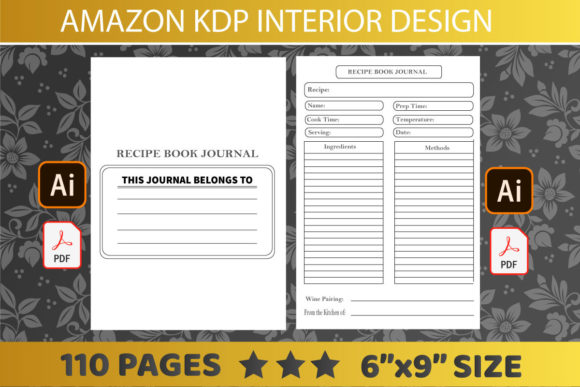
For publishers, entrepreneurs, and creators, understanding the technical and strategic nuances of this specific interior is essential. With specifications including Dimensions 6″ x 9″ Inches, 2 Pages per spread, 110 Pages, and a No Bleed setting, this template offers a precise framework for profitability. However, the true value lies in how you leverage the editable PDF and AI files to differentiate your offering in a saturated marketplace. This article explores the strategic application of these interiors to build a sustainable publishing portfolio rather than a collection of disposable products.
Strategic Positioning of the 6x9 Recipe Format
The decision to utilize a 6x9 inch trim size for a recipe book journal is not arbitrary; it is a calculated move based on user experience and shelf presence. In the context of kitchen organization, portability and counter space are paramount. A standard 8.5x11 inch workbook may offer more writing space, but it often feels cumbersome next to a stove or inside a crowded pantry. The 6x9 format strikes an optimal balance between writability and utility.
When planning your product line, consider the physical environment where the end-user will interact with this book. The compact dimensions allow the journal to function as a quick-reference guide during active cooking sessions. Strategically, this positions your product as a "working tool" rather than a passive archive. For marketers and publishers, this distinction is vital for copywriting and keyword targeting. You are not selling a diary; you are selling kitchen efficiency and culinary legacy preservation.
Furthermore, the 110-page count serves a dual purpose. It provides sufficient volume to feel substantial and valuable to the customer, justifying a higher price point than thinner notebooks. Simultaneously, it keeps printing costs low enough to maintain healthy royalty margins. This page count allows for approximately 50 to 55 unique recipe entries when utilizing the 2-page layout, which aligns perfectly with the capacity needed for a specialized collection, such as "Grandma’s Holiday Favorites," "Weekly Meal Prep Log," or "Gluten-Free Experimentation Journal."
Leveraging Editable Files for Market Differentiation
The availability of PDF and AI files that you can easily edit is the single most important factor in moving beyond commodity publishing. Uploading the stock interior without modification is a strategy destined for obscurity. The ability to customize these source files allows you to pivot from generalist to specialist, creating products that resonate deeply with niche audiences.
Niche Adaptation Through Layout Modification
Use the editable AI files to restructure the interior based on specific dietary or cultural requirements. A generic recipe journal might have fields for "Ingredients" and "Instructions." However, a strategic adaptation for a Keto-focused audience would modify these fields to include "Net Carbs," "Fat-to-Protein Ratio," and "Macro Breakdown." Similarly, a journal targeted at canning and preserving enthusiasts requires fields for "Processing Time," "Jar Size," "Batch Number," and "Seal Check Date."
This level of customization signals expertise and relevance to both the Amazon algorithm and the human shopper. When a customer searches for a specific solution, they are looking for evidence that the book was designed for them. By editing the base KDP INTERIORS- RECIPE BOOK JOURNAL template, you create proprietary assets that cannot be easily replicated by competitors relying solely on unmodified stock content.
Branding and Visual Consistency
Editable files also enable cohesive branding across a series. If you are building a publishing imprint focused on home organization, consistent typography, header styles, and iconography create brand recognition. You can insert custom intro pages, measurement conversion charts relevant to specific regions (metric vs. imperial), or index tabs that match your cover design. This consistency elevates the perceived value of the book and encourages repeat purchases from customers who trust your brand's quality standards.
Technical Precision: Managing No Bleed and Margins
Technical errors are the primary cause of poor customer reviews in low-content publishing. Understanding the No Bleed constraint is critical for maintaining professional quality. No bleed means that all printed content must remain within the safe zone, with no ink extending to the edge of the paper. This requirement demands rigorous attention to margin settings during the editing process.
- Gutter Safety: In a 6x9 book with 110 pages, the gutter (inner margin) must be generous enough to prevent text from disappearing into the binding. Failing to account for this results in a frustrating user experience where writers cannot comfortably use the inner third of the page.
- Visual Balance: Without bleed, your design elements must be intentionally framed. Use borders, boxes, or whitespace to create structure without risking trim errors. This limitation can actually enhance design clarity by forcing a cleaner, more organized aesthetic.
- File Verification: Always export your edited AI files to PDF and verify dimensions before upload. Even minor discrepancies between your artboard settings and KDP’s required trim size can lead to rejection or misprinting.
Treating technical constraints as design parameters rather than obstacles ensures that the final product functions as intended. A well-formatted interior reduces return rates and builds long-term credibility for your publishing business.
Intentional Product Development vs. Random Uploads
A common pitfall in this space is treating the KDP INTERIORS- RECIPE BOOK JOURNAL as a standalone lottery ticket. Strategic success requires integrating this asset into a broader business plan. Before editing or uploading, conduct validation research to ensure there is demand for your specific angle.
Aligning Interiors with Customer Intent
Analyze competitor reviews and community forums to identify gaps in existing offerings. Are users complaining that current recipe books lack space for notes? Do they wish there were sections for grocery lists or meal planning calendars alongside the recipes? These insights should drive your editing decisions. If the data shows a demand for hybrid functionality, use the editable files to convert every fifth spread into a weekly planner or shopping list. This intentional alignment between product features and customer pain points is what drives conversion.
Risk Mitigation Through Contextual Relevance
Using this interior without clear goals carries risks. The primary risk is market saturation in broad categories like "Blank Recipe Book." To mitigate this, avoid competing on generic terms. Instead, anchor your product in a specific context. A "Family Reunion Recipe Keeper" has a different competitive landscape and marketing angle than a "Professional Baker’s Testing Log." The interior remains largely the same, but the packaging, metadata, and minor customizations shift to serve a distinct intent.
Additionally, be wary of over-customization that reduces usability. While adding unique fields is beneficial, removing essential elements like serving size or cook time in favor of decorative fluff can render the book impractical. Always prioritize function over form. The goal is to facilitate the user's recording process, not to showcase graphic design skills at the expense of utility.
Operational Efficiency and Long-Term Value
For freelancers, small business owners, and publishers managing multiple titles, operational efficiency is key to profitability. The standardized nature of this KDP INTERIORS- RECIPE BOOK JOURNAL template supports scalable workflows. Once you establish a master file with correct margins, fonts, and branding elements, creating variations becomes a rapid process.
This efficiency allows for systematic testing of niches. You can produce three distinct versions of the recipe journal—one for vegans, one for BBQ enthusiasts, and one for sourdough bakers—in a fraction of the time it would take to design from scratch. This agility enables data-driven decision-making. Monitor sales performance across variations to identify winning niches, then double down on those segments with expanded content or complementary products.
Moreover, owning editable source files protects your business against platform changes or vendor lock-in. If you rely on non-editable PDFs, you are permanently tied to that specific layout. With AI and editable PDF files, you retain full control over your intellectual property. You can update designs to meet changing trends, fix errors discovered post-publication, or repurpose content for other platforms like Etsy digital downloads or direct-to-consumer sales channels.
Making Better Decisions for Sustainable Growth
Ultimately, the KDP INTERIORS- RECIPE BOOK JOURNAL is a foundational component of a larger publishing strategy. Its value is determined not by its existence, but by how thoughtfully it is applied. Success favors those who view this tool through the lens of problem-solving rather than mere production.
Before launching, ask critical questions: Does this specific configuration serve a defined audience better than existing alternatives? Have I optimized the 6x9 layout for actual kitchen use? Do my customizations add genuine utility or just visual noise? Is my pricing strategy aligned with the perceived value of the customized interior?
By approaching this asset with strategic rigor, technical precision, and customer empathy, you transform a simple template into a viable business asset. The combination of practical dimensions, flexible editing capabilities, and niche-specific application creates opportunities for sustainable income and brand building. In a marketplace crowded with mediocrity, intentionality is the ultimate competitive advantage. Use these interiors not just to fill pages, but to fulfill specific needs, thereby securing your position as a trusted provider in the low-content publishing ecosystem.