KDP Interiors for Passive Income: Evaluating 6x9 Editable Templates
The search for sustainable passive income through Amazon Kindle Direct Publishing (KDP) often leads creators to the low-content and medium-content book market. While the barrier to entry is low, the saturation of generic notebooks and journals has raised the standard for what actually sells. Success in this space now depends less on volume and more on the specific utility and presentation of the interior files. When evaluating resources labeled as KDP interiors for passive income, specifically those offering a 6″ x 9″ dimension with 110 pages and editable source files, it is necessary to look beyond the marketing claims and assess the practical workflow integration.
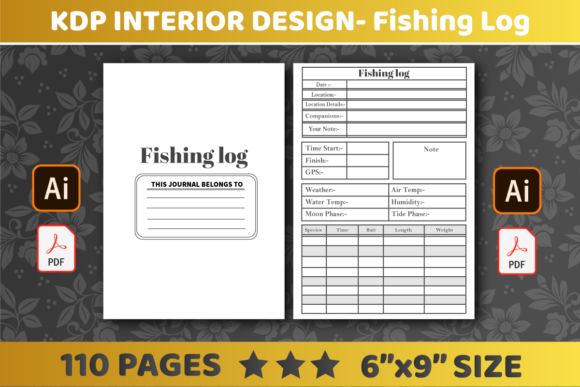
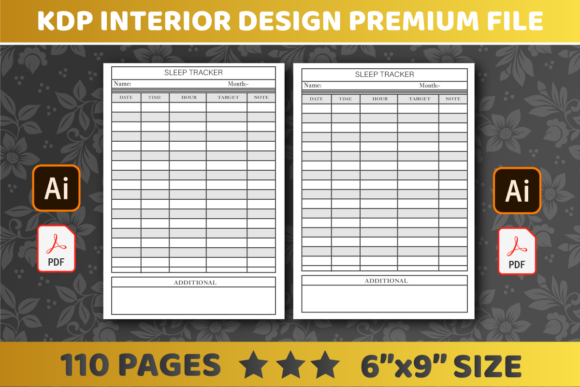
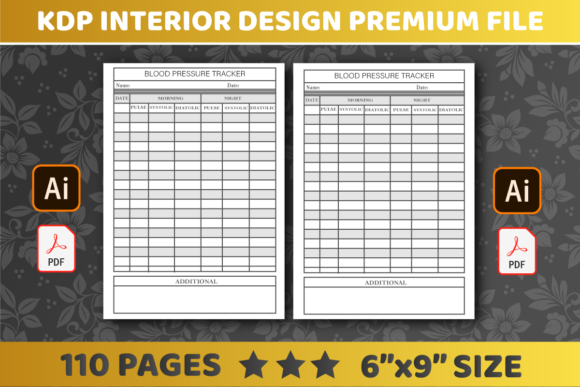
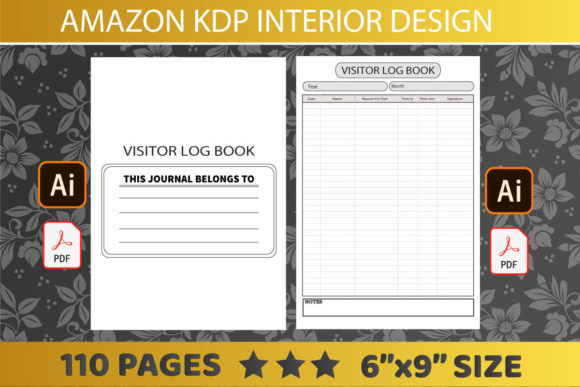
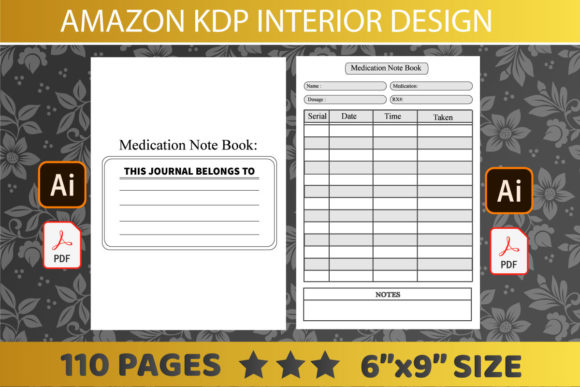
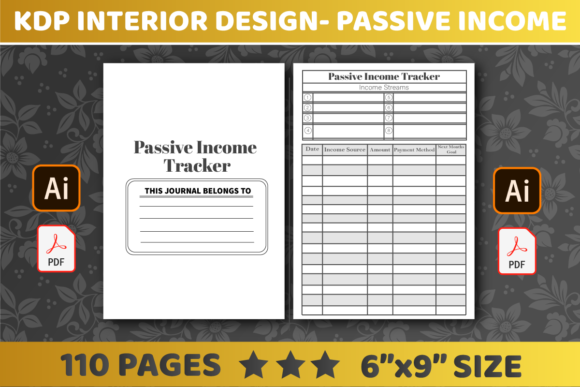
This analysis focuses on a specific asset configuration frequently encountered by publishers: a 6x9 inch template, 110 pages in length, set with no bleed, and delivered in both PDF and AI (Adobe Illustrator) formats. Understanding the technical and commercial viability of this exact specification helps determine whether such assets can genuinely support a long-term publishing strategy or if they merely add to the noise of undifferentiated products.
Technical Specifications and Platform Compliance
The foundation of any successful KDP product is strict adherence to printing specifications. The 6″ x 9″ trim size remains the industry standard for trade paperbacks, journals, and planners due to its portability and cost-efficiency. When sourcing interiors for passive income projects, verifying that the file dimensions are precise is critical. A true 6x9 template should account for gutter margins based on page count. For a 110-page book, the gutter requirement is modest, but pre-formatted templates save hours of manual calculation and reduce the risk of rejection during the upload process.
The "No Bleed" setting specified in this asset type is a significant practical advantage for new and intermediate publishers. Bleed requires images or design elements to extend 0.125 inches beyond the trim line, which complicates the design process and increases the likelihood of white borders appearing after trimming if alignment is off. A no-bleed interior keeps all content within a safe zone, ensuring that lines, text, and graphics remain consistent regardless of minor manufacturing variances. This makes the 110-page no-bleed format an ideal baseline for lined journals, dot grid notebooks, logbooks, and text-heavy planners where edge-to-edge printing is unnecessary.
The page count of 110 strikes a functional balance. It provides sufficient thickness to create a spine wide enough for legible text (approximately 0.275 inches on white paper), which enhances shelf presence and perceived value. Simultaneously, it keeps production costs low enough to maintain healthy royalty margins at competitive price points. In the context of KDP interiors for passive income, this page count is versatile enough for monthly trackers, specialized logs, or standard notebooks without feeling insubstantial or excessively padded.
The Strategic Value of Editable AI and PDF Files
The most defining characteristic of high-value KDP assets is editability. Receiving a static PDF limits a publisher to using the interior exactly as designed, leading to duplicate content issues when multiple sellers purchase the same pack. The inclusion of AI (Adobe Illustrator) files alongside print-ready PDFs transforms this resource from a finished product into a foundational toolkit.
Adobe Illustrator is the vector-based industry standard for layout design. Having access to the source AI file allows for granular customization that raster-based editors like Photoshop or Canva cannot match efficiently. Publishers can adjust line weights, modify header fonts, reposition margin guides, and alter repetitive patterns without degrading image quality. This capability is essential for differentiation. By spending thirty minutes modifying the provided template—changing a prompt style, adjusting the spacing of tracking fields, or adding a niche-specific introduction—a creator converts a generic asset into a unique product tailored to a specific audience segment.
Furthermore, vector-based AI files ensure crisp printing at any resolution. Unlike pixelated JPEGs or PNGs that may appear fuzzy in print, vector lines remain mathematically perfect. For interiors relying on clean grids, tables, or typography, this quality distinction directly impacts customer reviews and return rates. The dual-format delivery (PDF for immediate use, AI for customization) supports both rapid deployment for testing niches and deep customization for flagship products.
Workflow Integration and Efficiency
For professionals managing multiple titles, efficiency dictates profitability. Pre-formatted 110-page templates eliminate the repetitive setup phase of book design. Instead of building margins, gutters, and repeating master pages from scratch for every new journal, publishers can focus entirely on niche research and cover design. This streamlining is where the "passive" aspect of the income model becomes realistic; reducing active labor per unit improves the return on time invested.
However, users must possess or acquire basic proficiency in Adobe Illustrator to leverage the AI files fully. Those without access to Illustrator or the skills to use it will be restricted to the PDF version. While the PDF is still usable, the inability to edit restricts long-term scalability. Therefore, this specific asset configuration is best suited for creators who view design software as part of their professional stack rather than an optional add-on.
Market Viability and Differentiation Strategies
Possessing a high-quality, editable interior is only half the equation. The market for 6x9 journals is mature, meaning that simply uploading a standard lined notebook is unlikely to generate meaningful passive income. The value of these templates lies in their adaptability to micro-niches. A generic 110-page lined journal competes with millions of others; a 110-page "Bird Watching Field Log" or "Diabetic Blood Sugar Tracker" utilizing the same structural template competes with hundreds.
The no-bleed 6x9 format is particularly effective for functional books where usability trumps artistic flair. Examples include:
- Professional Logs: Mileage trackers, notary journals, or inventory logs where clean tables and ample writing space are prioritized over decorative borders.
- Educational Workbooks: Handwriting practice or math drills where consistent guidelines are necessary and bleed would distract from the learning area.
- Health and Wellness Trackers: Food diaries, symptom trackers, or gratitude journals that benefit from structured, distraction-free layouts.
- Hobbyist Notebooks: Recipe books, gardening planners, or knitting pattern organizers where the user needs reliable space for notes rather than full-page illustrations.
In each scenario, the editable AI file allows the publisher to customize headers, add niche-relevant icons, or adjust column widths to fit specific data entry needs. This level of adaptation signals to the Amazon algorithm and potential buyers that the book was created with a specific intent, distinguishing it from mass-produced spam.
Realistic Expectations for Passive Income
It is vital to approach KDP interiors for passive income with objective expectations. These templates are tools, not guarantees. Revenue generation correlates directly with the alignment between the interior’s functionality and market demand. A beautifully formatted 110-page planner will fail if there is no search volume for that specific type of planner. Conversely, a moderately designed interior targeting an underserved professional need can perform consistently.
The "passive" nature of this income stream emerges only after the initial active phases of niche validation, customization, keyword research, and listing optimization. Over time, as a catalog of differentiated, high-quality books accumulates, sales may stabilize. However, relying solely on unedited templates rarely produces sustainable results in the current ecosystem. The editability of the AI files is the mechanism that bridges the gap between commodity content and valuable intellectual property.
Assessing Fit for Your Publishing Goals
Determining whether this specific 6x9, 110-page, no-bleed, editable template set fits your needs requires an honest audit of your resources and objectives. This asset is highly suitable for:
- Serious Self-Publishers: Individuals committed to building a brand who understand that customization is mandatory for longevity.
- Freelancers and Agencies: Designers creating KDP books for clients who need reliable, modifiable base files to speed up delivery.
- Niche Site Owners: Content creators looking to monetize traffic with physical products that complement their digital content.
- Educators and Coaches: Professionals wanting to create proprietary workbooks or journals for students and clients without hiring a designer from scratch.
Conversely, this resource may not be appropriate for those seeking instant revenue without effort, creators unwilling to learn basic vector design principles, or publishers focused exclusively on full-color, bleed-heavy art books. The no-bleed, black-and-white optimized nature of this template serves functional and text-centric markets best.
Ultimately, KDP interiors for passive income represent a leverage point in the publishing workflow. By securing technically sound, editable assets like the 6x9 110-page AI/PDF template, publishers remove technical friction and redirect energy toward market research and creative differentiation. The tool itself does not generate income; rather, it provides the professional-grade infrastructure necessary for a publisher to build something that the market actually values. In an environment where quality thresholds continue to rise, starting with a flexible, compliant, and editable foundation is a pragmatic decision for anyone treating KDP as a legitimate business venture rather than a speculative lottery.