Arranged Goal - KDP Interiors: Evaluation and Usage Guide
Selecting the right interior template is a foundational step for self-publishers utilizing Amazon Kindle Direct Publishing (KDP). The "Arranged Goal" KDP Interior is a pre-formatted resource designed to streamline the creation of goal-oriented journals, planners, and tracking notebooks. This product provides a structured layout intended for users focusing on productivity, habit formation, or personal development. Understanding the technical specifications, practical applications, and limitations of this 8.5″ x 11″, 120-page template is essential for determining whether it aligns with specific publishing objectives and quality standards.
Product Overview and Technical Specifications
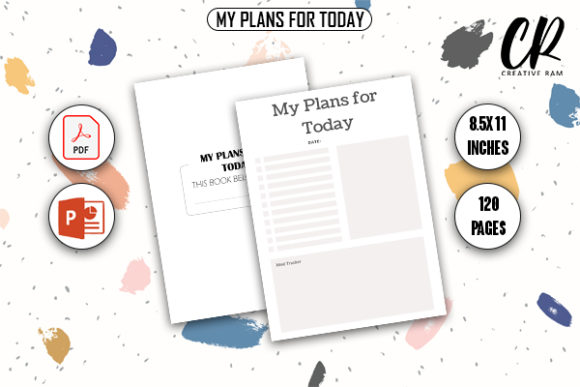
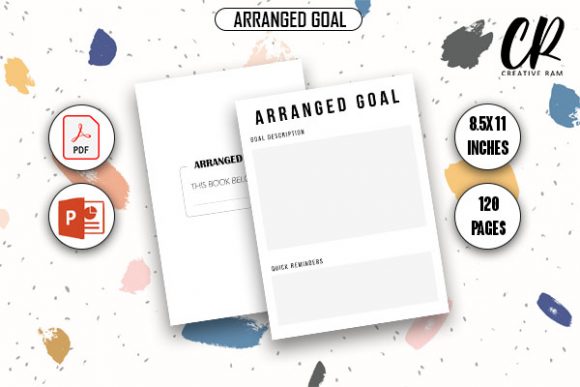
The Arranged Goal KDP Interior is defined by specific physical and digital parameters that dictate its compatibility with Amazon’s printing requirements. The dimensions are set at 8.5″ x 11″, which is a standard letter size frequently used for workbooks, academic planners, and comprehensive journals. This size offers ample surface area for writing, distinguishing it from smaller 6x9 formats often reserved for fiction or pocket guides.
The document contains exactly 120 pages. For low-content publishers, page count directly influences spine width and printing costs. A 120-page book on white paper typically results in a spine width of approximately 0.27 inches, allowing for legible spine text if desired. Crucially, this template includes bleed settings. Bleed ensures that design elements extending to the edge of the page are trimmed correctly without leaving white borders. Publishers must ensure their cover files match the bleed-inclusive dimensions generated by this interior to avoid rejection during the upload process.
The deliverables include both high-quality print-ready PDF files and editable PPTX source files. The PDF serves as the final production asset, while the PowerPoint file acts as a master template for customization. This dual-format approach addresses different user needs: those requiring immediate deployment and those needing to modify layouts before publication.
Evaluating the Benefits for Low-Content Publishing
The primary value proposition of the Arranged Goal interior lies in time efficiency and technical compliance. Creating a 120-page journal with consistent margins, headers, footers, and bleed settings requires significant design proficiency and software access. By utilizing a pre-made template, publishers bypass the initial setup phase. This allows for rapid iteration and testing of different niches within the goal-setting category.
Technical compliance is another significant factor. KDP has strict margin and bleed guidelines that vary based on page count and trim size. A professionally arranged interior mitigates the risk of formatting errors that lead to failed uploads or poor customer reviews due to cut-off content. The inclusion of source files adds long-term utility; rather than purchasing a new template for every variation, publishers can adapt the existing PPTX file to create series extensions or branded versions.
From a market perspective, structured interiors often perform better than blank lined notebooks. Customers searching for "goal journals" typically expect prompts, tracking tables, or reflection sections. The Arranged Goal format provides this perceived value without requiring the publisher to be an expert in instructional design or behavioral psychology.
Tradeoffs and Considerations
Despite the advantages, reliance on pre-made interiors involves inherent tradeoffs. The most significant concern is market saturation. Because templates like Arranged Goal are accessible to multiple sellers, identical interiors may appear across various listings. Amazon’s duplicate content policies do not strictly prohibit this for low-content books, but customers may recognize repetitive designs, potentially impacting brand loyalty and review scores.
Customization capability depends entirely on the user's proficiency with Microsoft PowerPoint. While PPTX is widely accessible, it lacks the advanced typographic controls and master page functionality of professional layout software like Adobe InDesign or Affinity Publisher. Complex modifications, such as changing global font styles or restructuring grid systems, can be tedious in PowerPoint. Users expecting pixel-perfect design flexibility may find the source file limiting.
Additionally, the fixed 120-page count restricts pricing strategy. Printing costs for color interiors at this page count are significantly higher than black and white. If the Arranged Goal template utilizes color elements, publishers must calculate royalties carefully to ensure profitability. Black and white interiors offer more margin flexibility, so verifying the color profile of the downloaded PDF is a necessary evaluation step before listing.
Situational Fit: When to Use This Template
The Arranged Goal KDP Interior is best suited for specific publishing scenarios. It is highly effective for beginners validating a niche. If a publisher wants to test demand for "student goal trackers" or "fitness planning journals," this template reduces the upfront investment of time and money. It allows for a minimum viable product launch to gauge market response before committing to custom design work.
It is also appropriate for publishers building a series around a consistent brand identity. The editable PPTX file enables the creation of uniform covers and interiors across multiple titles, fostering brand recognition. For educators, coaches, or consultants who wish to supplement their services with physical tools but lack design resources, this template offers a professional baseline that can be lightly customized with logos or specific terminology.
Furthermore, the 8.5 x 11 dimension makes this template suitable for workbook-style content where users need space for extensive note-taking alongside structured prompts. If the target audience values utility over portability, this larger format combined with the arranged goal structure creates a functional desk reference rather than a portable diary.
When to Consider Alternatives
There are distinct situations where the Arranged Goal template may not be the optimal choice. Publishers targeting premium price points ($14.99+) should generally invest in bespoke interiors. At higher price tiers, customers expect unique value propositions and distinctive design aesthetics that generic templates cannot provide. Competing solely on price with a shared template often leads to a race to the bottom.
If the intended niche requires specialized layouts—such as financial accounting grids, musical notation, or complex medical tracking—a general goal-setting template will likely fail to meet user expectations. Niche specificity drives sales in the current KDP landscape, and forcing a generic goal structure onto a specialized topic results in poor user experience and negative feedback.
Publishers with established design workflows using professional software may also find this product redundant. Converting a PPTX file to a professional layout format is often more labor-intensive than building a new master page from scratch. In these cases, purchasing individual graphic assets or fonts may offer better ROI than acquiring a full template.
Practical Decision-Making Insights
Evaluating the Arranged Goal KDP Interior requires balancing convenience against differentiation. Before downloading, publishers should conduct competitive analysis on Amazon. Search for keywords related to the intended niche and examine the "Look Inside" feature of top-selling books. If multiple bestsellers use identical layouts, the barrier to entry is low, but the ceiling for success may also be limited.
Consider the customization plan prior to purchase. Identify exactly what elements need modification to make the product unique. Can the headers be changed? Are there spaces for proprietary branding? Is the prompt language adaptable? If the answer is no, or if the required changes exceed current skill levels, the template may become a bottleneck rather than an accelerator.
Finally, verify the licensing terms associated with the download. Ensure the license permits commercial distribution via KDP and clarify whether attribution is required. Understanding these legal parameters prevents future account issues. By approaching the Arranged Goal interior as a strategic tool rather than a turnkey solution, publishers can leverage its efficiency while maintaining the quality and uniqueness necessary for sustainable success in the self-publishing marketplace.