Kakuro KDP Interiors: Launching a 142-Puzzle Book Without the Design Headache
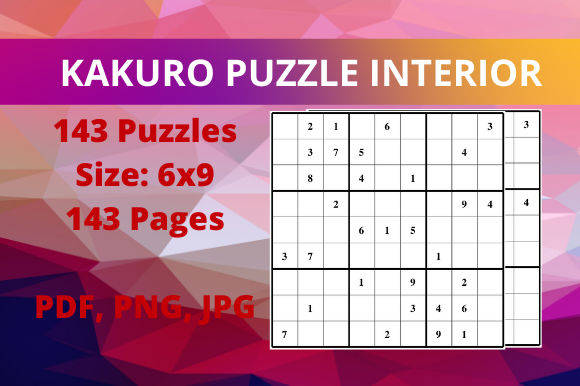
Creating a low-content book for Amazon KDP often feels like a race against time, but the real challenge isn't speed; it is quality assurance. When you are working with Kakuro KDP Interiors, specifically a pre-formatted collection of 142 puzzles with solutions, the value proposition shifts from simple content generation to risk mitigation. This specific interior template is designed for creators who want to bypass the mathematical validation phase and move straight to publishing. It offers a complete, tested manuscript that adheres to the 6x9 inch trim size with bleed, ensuring that your final product looks professional and functions correctly as a puzzle book.
The primary appeal here is the "ready to upload" status. For many self-publishers, the nightmare scenario involves ordering a proof copy only to discover that the grid lines are too faint, the numbers are misaligned, or the answer key doesn't match the puzzle on page 42. A verified interior containing 142 unique Kakuro puzzles eliminates this variable. Because the content is newly generated and tested for print readiness, you aren't just buying PDF files; you are purchasing peace of mind and a significant reduction in your pre-launch timeline.
Real-World Applications for Puzzle Entrepreneurs
While the specifications are technical, the application is deeply practical for various business models within the KDP ecosystem. Understanding how different publishers utilize these interiors can help you decide if this asset fits your current portfolio strategy.
The Niche Portfolio Builder
If you already have a successful Sudoku or Word Search brand, expanding into Kakuro is a logical next step to capture adjacent traffic. However, Kakuro is mathematically complex to generate manually. Using a pre-made interior allows you to test market demand without investing weeks in software development or hiring a programmer. You can upload this 142-puzzle volume under your existing pen name to see if your audience engages with logic-based number puzzles. If sales data validates the niche, you can then justify investing in custom tools for future volumes. This approach treats the interior as a minimum viable product (MVP) for category expansion.
Seasonal and Gift Book Creators
Kakuro has a distinct demographic appeal that differs from standard crosswords. It attracts people who enjoy arithmetic and logic, making it an excellent candidate for "Brain Training," "Senior Activity," or "Travel Logic" gift books. During Q4, when competition heats up, having a polished, error-free interior ready to go allows you to focus entirely on cover design and keyword research. The 6x9 dimension is particularly versatile for this audience; it is large enough for older adults to read comfortably without glasses, yet compact enough to fit in a travel bag or stocking. The 4-puzzles-per-page layout strikes a balance between value perception and readability, avoiding the cramped feel that often plagues budget puzzle books.
Educational Resource Developers
Beyond commercial publishing, educators and tutors often seek supplemental materials for students aged 10 through adult. Kakuro reinforces addition skills and logical deduction in a way that feels like play rather than work. A tutor might use this interior to create branded workbooks for summer camps or after-school enrichment programs. Because the content includes 142 puzzles with dedicated solution pages, it serves as a comprehensive curriculum supplement. The separation of answers (4 per page) from the puzzles ensures that students can check their own work without spoiling upcoming challenges, fostering independent learning.
Navigating Technical Specifications and Print Quality
Even with a done-for-you interior, understanding the physical constraints of the book is essential for marketing and customer satisfaction. The 6x9 inch format with bleed is an industry standard for a reason, but it requires careful handling during the upload process.
- Bleed Management: Since this interior includes bleed, your cover file must be sized accordingly. The artwork should extend beyond the trim line to prevent white borders after cutting. Ensure your KDP cover calculator settings match the interior’s bleed specification before uploading.
- Paper Type Considerations: Kakuro relies heavily on pencil marks and erasing. While standard white paper is acceptable, cream paper often provides better contrast for grid lines and reduces eye strain during extended solving sessions. Test both options if possible, as the user experience varies significantly between them.
- Binding Safety Margins: With 142 pages plus front and back matter, the spine width will be substantial. Verify that no puzzle elements or solution numbers fall too close to the gutter. A well-formatted interior accounts for this, but always review the digital proofer to ensure the inner margins provide ample space for writing near the binding.
Strategic Differentiation in a Saturated Market
A common concern with pre-made interiors is the potential for duplicate content penalties or market saturation. While this interior contains new, non-duplicate content, success depends on how you package it. You cannot simply upload the file and expect organic visibility. The interior is the foundation, not the entire house.
Differentiation starts with the cover. Your cover must signal the specific difficulty level and target audience. Is this "Easy Kakuro for Beginners" or "Expert Logic Challenges"? The interior supports both, but your metadata must be precise. Utilize the 142-puzzle count as a selling point in your subtitle and description. Many competitors offer 50 or 100 puzzles; highlighting the extra value helps justify a competitive price point.
Furthermore, consider bundling or series creation. A single 142-puzzle book is a standalone product, but three volumes formatted identically create a recognizable brand shelf presence. Consistency in interior formatting builds reader trust. When a customer buys Volume 2, they know exactly what to expect regarding font size, grid clarity, and answer key placement. This predictability is crucial for building a loyal following in the puzzle niche.
Evaluating Limitations and Best Practices
Transparency about what this resource cannot do is just as important as highlighting its benefits. A pre-formatted interior restricts certain types of customization. You cannot easily adjust the difficulty curve mid-book or change the grid sizes without breaking the layout. If your brand identity relies on proprietary puzzle variations or unique instructional intros, you may need to edit the PDF directly, which requires vector editing software and technical proficiency.
Additionally, while the content is tested, platform algorithms evolve. Always run a fresh check through KDP’s previewer tool. File rendering can occasionally shift during updates, and catching a margin error digitally costs nothing, whereas fixing it after printing costs time and reputation. Treat the "ready to upload" label as a baseline, not a guarantee against platform-specific quirks.
Finally, remember that the puzzle community is vocal about quality. Even with a perfect interior, your book’s longevity depends on accurate solutions and clear printing. Encourage early reviews by providing a seamless user experience. Include a brief "How to Solve" section at the front if one isn't present; Kakuro rules are less universally known than Sudoku, and helping new players succeed increases positive feedback and reduces returns. By combining a robust, tested interior with thoughtful packaging and user-centric additions, you transform a generic template into a valuable asset for your publishing business.