Evaluating Monthly Workout Planner KDP Interiors for Low-Content Publishing
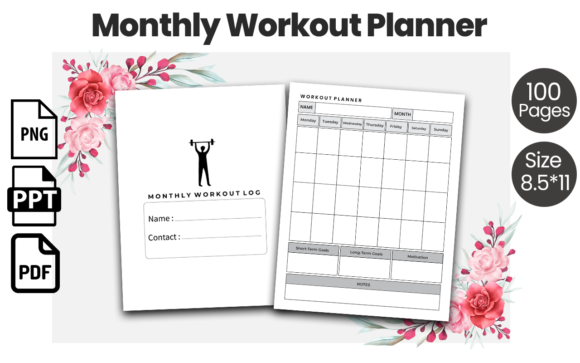
Selecting the right interior template is often the most critical decision in the low-content publishing process. For creators focusing on the fitness niche, a Monthly Workout Planner KDP Interior serves as the foundational product structure. Unlike generic journals, these interiors require specific functional layouts that accommodate tracking, progression, and habit formation. When evaluating available resources, publishers must look beyond aesthetic appeal and assess technical specifications, customization potential, and market fit. A standard option in this category typically features 8.5 x 11-inch dimensions with 120 pages and no bleed settings, delivered in PDF, PPTX, and PNG formats. Understanding how these specifications translate to a viable commercial product requires a detailed comparison of features against current market demands and alternative creation methods.
Technical Specifications and Print Compatibility
The baseline specification for most monthly workout planners is the 8.5 x 11-inch trim size. This dimension is the industry standard for fitness logs because it provides sufficient horizontal space for weekly grids, exercise tables, and notes sections without requiring users to write in cramped margins. When comparing pre-made interiors, verifying the page count is essential. A 120-page count is a strategic midpoint; it offers enough volume for three to four months of daily tracking or a full year of monthly overviews, depending on the layout density. Thicker books increase printing costs and spine width requirements, while thinner books may perceive lower value to the customer. The 120-page format balances production cost with perceived utility.
The "No Bleed" designation is another critical technical factor. No bleed means all content remains within a safe margin, typically 0.375 inches from the edge on non-gutter sides and more on the gutter side. This differs significantly from full-bleed designs where graphics extend to the paper's edge. For workout planners, no bleed is often preferable because functional elements like checkboxes, lines, and text fields need clear white space to remain legible after trimming. However, this limitation also means designers cannot use background colors or border patterns that touch the page edge. Publishers comparing options must decide if their brand identity relies on edge-to-edge graphics or clean, minimalist functionality. If the former is required, a no-bleed template will necessitate significant redesign work or may be unsuitable entirely.
File Format Versatility and Customization Potential
A distinct advantage of comprehensive Monthly Workout Planner KDP Interiors packages is the inclusion of multiple file types: PDF, PPTX, and PNG. Each format serves a different purpose in the publishing workflow, and understanding their tradeoffs helps determine which resource best fits your technical capabilities.
- Print-Ready PDF: This is the non-negotiable deliverable for Amazon KDP. High-quality PDFs ensure that fonts are embedded, lines are crisp at 300 DPI, and dimensions are exact. When evaluating a product, verify that the PDF is flattened to prevent font substitution errors during upload. A print-ready file allows for immediate uploading but offers zero editability.
- PPTX Source Files: PowerPoint files represent the primary customization layer. Unlike Adobe InDesign templates, PPTX files are accessible to creators without professional design software licenses. This format allows users to modify text, adjust table sizes, change color schemes, and swap placeholder graphics. The tradeoff is precision; PowerPoint is not a native print layout tool, so users must be vigilant about maintaining alignment and resolution when exporting back to PDF.
- PNG Assets: Individual PNG files provide modular design elements. These are useful for mixing and matching components from different planner styles or creating marketing mockups. While less critical for the interior book block itself, having isolated assets saves time when designing covers or social media promotions.
When comparing this multi-format approach to single-format alternatives, consider your long-term strategy. Resources offering only PDFs are faster to launch but create dependency on a single static design. Conversely, hiring a custom designer provides unlimited flexibility but at a higher upfront cost and longer timeline. The PPTX-included model sits in the middle ground, offering semi-customizability for creators who want to differentiate their products without mastering professional typesetting software.
Functional Design vs. Generic Journal Alternatives
The fitness planning niche is saturated with low-effort alternatives, primarily lined journals or generic dot-grid notebooks. Comparing a specialized Monthly Workout Planner KDP Interior against these basic options reveals significant differences in user value and market positioning. Generic journals rely entirely on the user to create their own tracking systems. While flexible, this creates friction; many users abandon fitness logging because drawing tables daily is tedious.
Specialized interiors solve this friction through pre-structured layouts. Effective workout planners include dedicated sections for warm-ups, main lifts, cardio metrics, nutrition tracking, and progress photos. When evaluating a template, examine the granularity of these sections. Does the monthly view allow for goal setting alongside calendar dates? Are there weekly breakdowns that accommodate rest days? Some templates prioritize aesthetics over function, leaving insufficient writing space for users who track high-volume training data. Others may be too rigid, failing to accommodate varying workout splits like push-pull-legs or upper-lower routines.
The decision between specialized and generic often depends on target audience maturity. Beginners often prefer highly structured interiors that guide their tracking habits. Advanced athletes may prefer simpler logbooks with minimal prompts. A well-designed Monthly Workout Planner KDP Interior should strike a balance, providing structure without dictating methodology. If a template feels overly prescriptive or includes irrelevant sections (such as extensive meal planning in a pure strength log), it may limit your addressable market compared to more adaptable alternatives.
Evaluating Quality and Resolution Standards
Not all downloadable interiors meet professional printing standards. A common pitfall in the low-content space is sourcing files that appear sharp on screen but print poorly. When assessing quality, look for explicit confirmation of 300 DPI resolution for all graphical elements. Vector-based PDFs are superior to rasterized images because they scale infinitely without pixelation. Lines should be hairline or appropriately weighted; thick, blurry lines suggest low-resolution source files.
Additionally, check grayscale calibration. Most KDP standard color interiors print in black and white. Templates designed with subtle gray tones or light colors may reproduce inconsistently across different printing facilities. High-contrast designs with solid blacks and whites generally yield more reliable results. If a sample preview shows muddy grays or aliased edges, the final printed product will likely disappoint customers regardless of the layout’s conceptual merit.
Strategic Fit: When to Choose Pre-Made vs. Custom
Determining whether a pre-made Monthly Workout Planner KDP Interior is the right choice involves honest assessment of your resources, skills, and business goals. These templates excel in specific scenarios but present limitations in others.
Ideal Use Cases:
- Rapid Market Testing: When validating demand for a new fitness sub-niche (e.g., postpartum recovery, senior mobility, powerlifting), speed matters more than unique branding. Pre-made interiors allow publication within days rather than weeks.
- Portfolio Diversification: Established publishers expanding into fitness can leverage existing workflows. Using standardized 8.5x11 no-bleed templates maintains consistency across a catalog while reducing per-title development time.
- Non-Designer Creators: Individuals with marketing expertise but limited graphic design skills benefit from PPTX-editable templates. The learning curve is manageable, and the output quality exceeds typical DIY attempts.
Situations Requiring Alternatives:
- Saturated Sub-Niches: If targeting highly competitive keywords like "general weight loss journal," pre-made templates may lack the differentiation needed to rank. Custom design becomes necessary to stand out.
- Complex Tracking Needs: Specialized methodologies (e.g., heart rate zone training, periodization cycles) often require bespoke layouts that generic templates cannot accommodate without extensive modification.
- Brand-Centric Products: Coaches or influencers building personal brands need proprietary designs that reflect their unique methodology. Using recognizable stock interiors can dilute brand authority and create legal risks if licensing terms are misunderstood.
Making an Informed Selection Decision
Ultimately, choosing a Monthly Workout Planner KDP Interior is a calculation of efficiency versus uniqueness. The 8.5 x 11 inch, 120-page, no-bleed specification represents a proven commercial format that minimizes printing complications and maximizes usability. The inclusion of PDF, PPTX, and PNG files provides a versatile toolkit for both immediate deployment and future iteration.
However, successful publishers treat these templates as starting points rather than finished products. Even with editable source files, adding unique value through customized introductions, proprietary tracking methods, or branded cover design is essential for long-term viability. Compare available options not just on price or page count, but on how easily they integrate into your specific workflow and how readily they can be adapted to serve a distinct audience segment. By prioritizing functional design quality and realistic customization capabilities over superficial variety, creators can select resources that support sustainable publishing businesses rather than contributing to marketplace noise.